
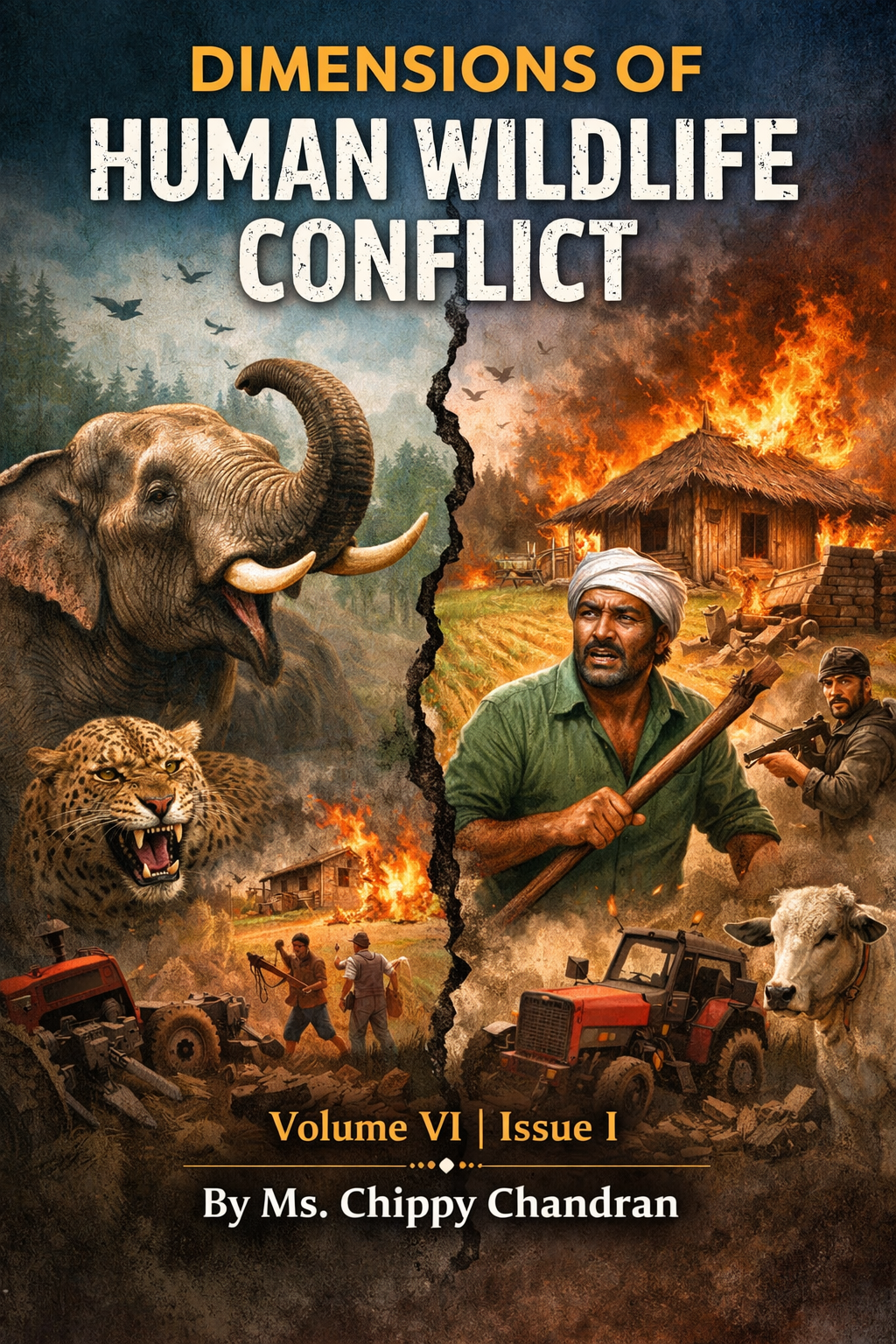
Human-wildlife conflict (HWC) is among the timeliest problems of contemporary conservation and development of the society. It is a clash of two vital elements of our ecosystem people and animals which cannot live without each other due to the shared spaces and resources. As the human beings continue encroaching the natural habitats deeper into the natural ecosystems, interactions between these groups have been increasing and, in most cases, interactions have been destructive to both groups. Further aggravating this issue are deforestation, climate change, and rapid urbanization which create a complex nexus of environmental, socio-cultural, and economic issues. The subsequent destruction of biodiversity and degradation of ecological diversity indicate the need to find new and sustainable solutions to diminish HWC and bring people to coexistence.
- ECOLOGICAL DIMENSIONS OF HUMAN-WILDLIFE CONFLICT
The ecological dimensions of HWC refers to the underlying ecological dimensions and processes that predetermine the relationships between human beings and wildlife and, in the majority of cases, result in a conflict. These dimensions demonstrate the influence of the ecological changes, which occur due to the natural or man-made processes, on the ecosystems, species behavior, and resource supply, and thereby on the threat of conflict. These dimensions are significant to learning sustainable modalities of eradicating conflicts despite preserving biodiversity.
A. Habitat Loss and Fragmentation
Habitat loss and habitat fragmentation are the critical ecological drivers of HWC. The destruction of natural habitats to make farmlands, infrastructures and cities leaves the wildlife unhappy and it seeks food and shelter in their new environment. The animals are divided in fragmentation, which impacts the natural migration patterns and renders the important resources inaccessible. The best example of this in India is when the roads and railways are being established in woodland, the animals that tend to be killed as a consequence of the construction are the elephants who are involved in collisions with the vehicles that pass. The habitat destruction further increases the competition of the available resources thus increasing the number of conflicts.[1]
B. Changes in Species Behavior
The ecological imbalance has the potential of altering the behavior of the wildlife species and making them more prone to human contact. The necessity to fly to the human settlements is explained by such aspects as the reduction of the habitat area, disappearance of predators, and seasonal variations of the food resources among other things. The predators, like the tigers and the leopards, may adopt the habit of feeding on the livestock and the herbivores like the elephants and the wild boars may adopt the habit of crop-raiding. It is generally a survival mechanism but at a cost, human beings and even wildlife may be killed in retaliation leading to the deterioration of the population.[2]
C. Climate Change and Resource Scarcity
Another significant ecological issue that improves HWC is climate change. Alterations in rainfalls, prolonged droughts and variations in temperatures influence the ecosystems through reducing food and water supply among the wildlife. As a case in point, animals like lions and elephants in dry regions may invade the human population to access water sources hence creating a threatening experience. Similarly, the changes in the climatic conditions can also force the species displaced to relocate beyond the typical pattern into the direct contact with the human activity[3].
D. Loss of Ecological Balance
Deforestation, hunting and introduction of invasive species are human activities that change the balance in the ecology and in most instances cause population explosion or extinction of certain species. Overpopulation of the herbivores due to absence of predators may cause massive destruction of crops and the predators may be of no use hence increasing predation on the livestock. Further, food web is disrupted by loss of key species in ecologies and this effect of the disturbance of the food web has subsequent impacts that predispose human to wildlife conflicts.
E. Impact on Ecosystem Services
HWC has impacts on the human-dependent ecosystem services which the wildlife relies on to survive. The consequences of the conflicts are in the majority of cases the degradation of the ecosystems through retaliatory murders, the exploitation of the resources and the destruction of the habitats. One such example is that in the event of conflict loss of apex predators, herbivores could over browse the vegetation cover and soil fertility. These environmental changes affect the resilience of these ecosystems making them unable to support a number of species, which include the human beings.
The ecological factors of human-wild animal conflict show that ecological disruption and conflict can be very complex, and more sustainable options are necessary to facilitate co-existence. The destruction of natural ecosystems, fragmentation, and climate alteration alters the ecosystems and compels the wildlife in the human habitat and heightens the contacts. All these disrupt the species behavior, ecological homeostasis, and resource accessibility leading to retaliatory behavior, which could and tends to harm biodiversity and ecological services. In order to have coexistence, there must be some form of assistance to the control of these ecological drivers through conserving habitats, ecological balance restoration and there are plans to mitigate the impacts of climate. The mitigation strategies can be successfully balanced and sustainable future when combined with sustainable development, which can be done by preserving the biodiversity, improving resilience to the ecosystem and ensuring that the human beings and the wildlife do not live in conflict.
- SOCIO-ECOLOGICAL DIMENSIONS OF HUMAN-WILDLIFE CONFLICT
The socio- ecological element in human-wildlife conflicts dwells on how ecological and human social systems interact, how the human behavior, culture, economics and government interrelate with the environmental process to influence the clashes that human beings and the wild undergo. These dimensions are the key factors in formulating holistic mitigation initiatives that would view the problem of human-wildlife interactions in a complex and multi-dimensional manner, and that would take into account the social and ecological strategies.
A. Human Dependence on Natural Resources
The other significant socio-ecological driver of HWC is the fact that human population especially settlements around rural areas depend on natural resources to make a living. Farming and herding activities practiced by the people are normally reliant on the land near or within the wildlife areas. Such encroachment of humans in the habitat of the wildlife increases the likelihood of interaction. As one example, in rural areas, the crops and water supply might be ruined by the elephants, livelihood and food shortage. These conflicts are acute in particular when the livelihood of human beings is extremely dependent on the land and the accessibility of resources, and conservation interests and the needs of the community are placed in opposition to each other.[4]
B. Cultural Perceptions and Attitudes
The most important aspects of affecting human response to wildlife include the cultural beliefs, perceptions and traditional systems of knowledge. Some societies even worship some animals and accept or minimize war with the help of some traditional resources. On the other hand, other communities will view certain species as a source of danger or nuisance leading to negative attitude and revenge. To demonstrate, despite the fact that the phenomenon of elephants is culturally relevant in most of the Indian cultures, their habit of crop raiding usually results in economic deprivations thereby rendering it hard to live in harmony. Such social-cultural aspects will come in handy in formulating solutions to human-wildlife conflicts that are situational[5].
C. Economic Inequalities and Vulnerabilities
The socio-economic conditions also have a strong impact on the effects of HWC as well as its control. Marginalized and economically vulnerable communities are the recipients of such conflicts most of the time since they lack resources to undertake any mitigating action or experience the loss. Poor income families are more severely affected by loss of crops, predation by animals, or destruction of property by wildlife, which exacerbates poverty and hostility towards conservation action. The richer societies may be more able to access fencing and insurance or restitution schemes, which would reflect the injustice of conflict mitigation and remedy[6].
D. Governance and Policy Challenges
The socio-ecological factors of human-wildlife conflict are also dependent on the governance systems and policies. Some of the reasons which have seen the perpetuation of conflicts are in the failure to protect wildlife, poor compensation systems among the affected communities and the absence of integrated land-use planning. As an example, in some places where the wildlife corridors have not been well maintained or guarded, the chances of the animals to roam within the human population are increased. It involves balancing conservation and communal good by incorporating the policies, the process of decision making, and sharing of the resources equally by imposition of good governance[7].
E. Community-Wildlife Relationships in a Changing Environment
Climate change, urbanization and population growth have increased the socio-ecological strains which lead to human-wildlife strife. The ecosystem surrounding wildlife species is changing because of human activity that consequently alters their evolution. Habits or use lead to the species being brought closer to human settlements. Meanwhile, the encroachment of urban settlements in the habitat of the wildlife is also increasing, thus causing clashes on a more common ground. These changes demand creative approaches to accommodate socio-ecological perspectives such as community-based conservation, habitat recovery and sustainable land-use strategies.
Human-wildlife conflict has a socio-ecological dimension which has a strong impact on the coexistence and sustainability process due to the focus on the complexity of human-wildlife relationship and interdependence. These aspects point to the significance of the vulnerabilities of the economy, cultural orientations, governance and ecological developments, which jointly influence conflict dynamics. The communities that are normally at the receiving end of these conflicts and the marginalized communities should be accorded with reasonable solutions that can promote their socio-economic needs, as well as promote the conservation of the wildlife. Inclusive policies, community participation and participatory decision making is the key to creating a balance between conservation priorities and human wellbeing. Besides that, the conflicts would be minimized by the integration of the traditional knowledge and science, which would restore the habitats and enhance the sustainable land-use methods, hence sustaining the biodiversity. Socio-ecological strategies are one of the ways to find the way to ecological sustainability and harmonious coexistence considering the interplay between the human behavior, the system of governance and the ecological processes.
3. CULTURAL DIMENSIONS OF HUMAN-WILDLIFE CONFLICT
The cultural aspects of human-wildlife conflict include how the culture, beliefs, traditions and values practiced by a certain culture influence the attitude and relationship of the human beings and the wildlife. These dimensions underscore the value of culture with regards to perceptions of wildlife, response in case of conflict, and how well the conservation process succeeds. These aspects of cultures are very critical as they are supposed to be learned in order to devise strategies that are acceptable to the local cultures yet compatible in ensuring that the people and wildlife live in harmony.
a. Cultural Perceptions of Wildlife
What the cultures view is extremely significant as far as the communities exude their views on wildlife. In most societies, the animals are very deeply connected with mythology, religion as well as a section of folklore as components of power, wisdom or divinity. Indicatively, Hindu and Buddhist religions consider the elephants as sacred objects; it can be attributed to some gods like Ganesha. This cultural obedience may be the reason behind tolerance to war or efforts to rescue such animals no matter the destruction they may cause. Conversely, there have been negative dispositions towards some animals in certain cultures with regards to them being regarded as a pest, dangerous or even evil, this causes the killing of such animals as a form of revenge. The latter views are holistic as they influence conservation and conflict curb policies[8].
b. Traditional Knowledge and Practices
Rather likely, native/local populations could be having a substantial amount of traditional information on the behavior and ecology of wildlife. This knowledge has been used in the past to minimize conflict in the form of, crop rotation, animal discouragement and conservation areas using sacred groves. An example of the case is the Maasai tribes in Africa, who have coexisted with the lions and employed the hunting method of herding to minimise predation levels. Nevertheless, balance between the traditional practices and the current natural conservation science is required, since there is the contemporary demand of land use loss and alteration which has disrupted such practices[9].
c. Rituals and Sacred Spaces
The rituals and sacred space are usually a tool in human-wildlife interaction. A majority of cultures designate some areas e.g. forests, rivers, mountains and seal them out of exploitation. The locations are usually the most valuable habitats to the wildlife which indirectly works to the advantage of conservation. As the example there is also the case of sacred groves in India where there are other endangered species. Talking the same way, animal rituals and festivals will bring a feeling of responsibility to animal conservation. However, the practices might exercise their effectiveness in satisfying the survival of wildlife once they are shared or forgotten.
d. Cultural Conflicts in Conservation Efforts
Cultural entrepreneurs who fail to consider cultural values and practices may not easily win acceptance of the conservation activities of local communities. Curling as though; imposing of hard-core laws that put the life of the wildlife into safety without involvement of the indigenous people, it is subject to change the livelihood of the local people and lead to resentment. To the same extent, the cultural identity and heritage might be threatened as the communities in the traditional lands are evicted to conserve the land. Conflict mitigation activities should be sensitive to the cultures of the local communities where the local stake holders should be included in the decision-making procedures, their customs respected in addition to providing an alternative to these practices, which can lead to environmental degradation[10].
e. Role of Education and Awareness
And there is also the importance of education and awareness in the resolution of human-wildlife conflict projected by cultural dimensions. By integrating wildlife conservation within the cultural narratives, individuals can establish a more comprehensive understanding of eco-friendly ecosystems conducted by plants and animals and why human’s ought to co-exist. The festivals, narration and art might become the means of tremendous power in disseminating the notion of wildlife friendly methods without Americanizing the cultural practices. An example would be the education initiatives referencing the community setting that entails the utilization of the local language and community folklore that will aid in bridging the gap between conservation science and culture.
The cultural aspects of human-wildlife conflict are highly influential on the attitude, behavior and response towards wildlife because they determine the challenges and the option of coexistence and sustainability. The cultural beliefs and traditions are generally likely to affect how the community perceives the wildlife species with some being regarded as something sacred and some being regarded as a threat to the community; this directly concerns the conservation programs. The harmonious relationship with wildlife is backed with historical experience to apply traditional knowledge, rituals and sacred spaces, which tends to be the informal conservation method. However, modern needs and conservation policies with not much consideration to cultural values might lead to resistance and become an obstacle to minimize the conflicts. The modern preservation strategies such as introducing the local customs to the education or preservation of the sacred spaces have to be combined with the cultural practices to build the mutual respect and the cooperation. Such cultural sensitivity will facilitate coexistence since the interest of the conservation objectives will be to satisfy the community values to safeguard biodiversity and cultural heritage that will ultimately offer sustainable outcomes
[1]Zhifeng Liu et al., The Relationship between Habitat Loss and Fragmentation during Urbanization: An Empirical Evaluation from 16 World Cities, National Center for Biotechnology Information, https://pmc.ncbi.nlm.nih.gov/articles/PMC4849762/
[2]Gaelle Fehlmann et al., Behavioral Causes, Ecological Consequences, and Management Challenges Associated with Wildlife Foraging in Human-Modified Landscapes,71 bio.sci.40-45 (2020)
[3]CFC India, How Climate Change is contributing to a rise in Human-Wildlife Conflict, Climate Fact Check, https://climatefactchecks.org/how-climate-change-is-contributing-to-a-rise-in-human-wildlife-conflict/
[4].IUCN, IUCNSSCGuidelinesHumanWildlifeConflictandCoexistence, https://portals.iucn.org/library/sites/library/files/documents/2023-009-En.pdf
[5]id at 62
[6]. Ann Julie Fredy et al., Socio-Economic Impact of Human-Wildlife Conflict: A case study conducted among the frontline community of Malakkapara, Kerala, 2 IJCRM 1 (2023).
[7]E. Gross et al., A Future for All: The Need for Human-Wildlife Coexistence, WWF15(2021) wwfint.awsassets.panda.org/downloads/a_future_for_all__the_need_for_human_willdife coexistence.pdf
[8]Supra
[9]Supra
[10]Supra