Abstract
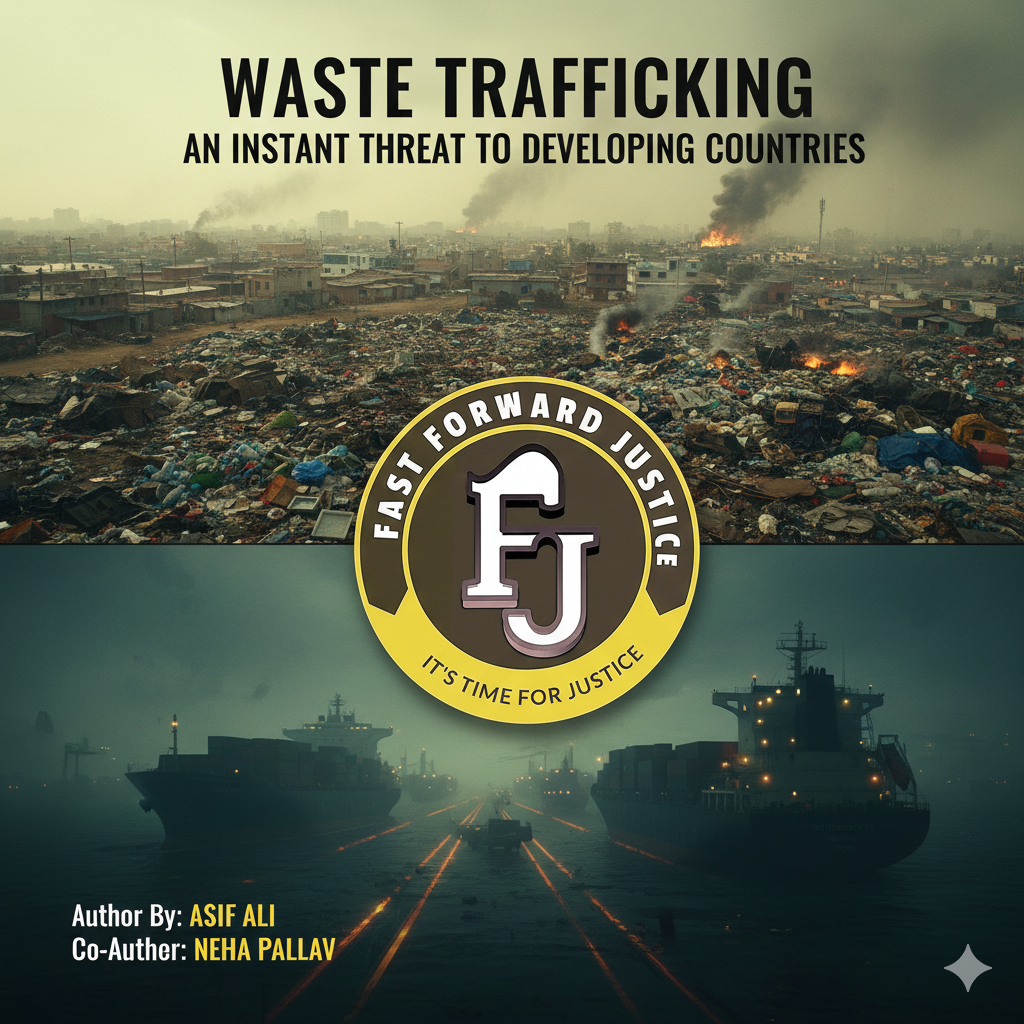
Transnational trafficking of e-waste has become a rising problem over time as the amount of waste produced in developed countries increases. Over time, the focus has moved from traditional industrial waste disposal to e-waste disposal. This acceptance of hazardous waste often leads to adverse health effects in the importing nation. As a case study, the history, consequences, current policies, and recommendations for hazardous waste trafficking are considered in context of West Africa. Following the analysis, it is clear that despite strong policies on the importers part, there are confounding factors, such as economic expansion and corruption, which continue to drive the import of e-waste. Therefore, the recommendations are addressed to exporting nations which generally have well-developed economies, political systems, and technology thus increasing the likelihood of control over the situation.
Key Words
E-waste, transnational trafficking, policy, West Africa
- Introduction
“We must raise our voice for the things that matter; we just can’t overlook things and look other way, and say that we did not know it.”
The purpose of this article is to make an analysis of the waste trafficking, its recent scenario and various conventions made across the globe to reduce the same. This article will also throw light on the situation of waste trafficking in West African context because West African countries are most vulnerable to waste trafficking.
Waste trafficking simply refers to ‘illegal export of the waste’. With the economic development all over the globe the waste produce is also increased. As the amount of waste produced in developed countries have increased, this has resulted in rising issues related to transnational trafficking. The illegal waste dumping and consequent environmental problems is common in the recent scenario. This also led to significant increase in the cancer mortality and malformation occurrence in specific areas. Over time, the focus has shifted from traditional industrial waste disposal to e-waste disposal. “E-waste refers to end-of-life electronic products, including televisions, monitors, computers, audio and stereo equipment, video cameras, telephones, fax/photocopy machines and printers, mobile phones, wireless devices, chips, motherboards, cathode ray tubes and other peripheral items”.[1]
There are various factors which affect the import and export of wastes. The general scenario shows that in most of the cases the industrialized nations often lack the resources which are required to accommodate the waste expansion. As a consequence of this various developed countries try to reduce this burden by exporting their wastes to the developing country. In the prospect of economic growth developing countries are often forced to accept such exports despite experiencing several health issues. There are several extensive policies concerning the trafficking of various hazardous wastes among various countries still it continues to be one of the appealing problems for many developing nations demanding their concern over the same matter.
- Historical Aspect.
It is believed that in the late 1980s the concept of dumping the toxic waste from developed nations to developing nations was first time spotted across the globe. After this, there have been numerous instances which show the hazardous waste dumping. As the importing of these substances results in increasing health issues in the importing country these often results in creation of numerous policies.
There have been various instances which show the export of hazardous wastes. Some can be described as follows:-
- Koko, Nigeria (1988)
In May 1988, Koko, Nigeria imported 900 tonnes of toxic waste from Italy. Out of these 900 tonnes of toxic waste, 150 tonnes were PCBs. Chemicals such as formaldehyde and methyl melamine, both of which are suspected carcinogens were also imported. This import was mainly facilitated by a construction company, whose member, Gianfranco Rafaelli, had previously acquired a land in Nigeria. Without giving the exact list of the chemicals that were actually imported, the construction company applied for a permit to import mineral wax, polishing oil, cinder ash, and other industrial chemicals.
- Abidjan, Ivory Coast (2006)
Around 500 tonnes of hazardous waste was dumped by Trafigura management in about 14 sites in Abidjan, Ivory Coast primarily the sites near water and agriculture sources in 2006. As a result of which 17 people died and more than 80,000 were forced to get medical attention. It is claimed that the wastes which were imported were having sulphur hydrocarbon in it. Sulphur hydrocarbon is considered as highly toxic and is generally found in various types of crude oil.
- Kassa Island, Guinea (1988)
In March 1988, a Norwegian shipping company dumped 15,000 tonnes of incinerator ash from Philadelphia into a quarry on Kassa Island. This incident was discovered when the island’s vegetation began to die. Subsequent investigations led to the discovery of a contract wherein Guinea was to receive a total of 85,000 tonnes of waste.
- Recent Scenario
Current International trade of waste follows a pattern which shows that the waste produced in the Global North is being exported to and disposed of in the Global South. There are various factors that affect the production and magnitude of the waste disposed of by countries, including geographic location, degree of industrialization, and level of integration into the global economy.[2]
Incidents of toxic waste dumping in developing countries prior to 1992 generally involved wastes that were by-products of industry (for example, petroleum refiners and pesticide manufacturing industry) such as radioactive material, sludge, and heavy metals. Post-1992, there have been few cases of such toxic waste dumping; instead, the focus has become e-waste (United Nations Office on Drugs and Crime, 2009). The United Nations Office on Drugs and Crime (UNODC) (2009) estimates that 94,900 tonnes of e-waste is trafficked from developed to developing nations annually. Transnational trafficking of e-waste, similarly, is not always straightforward.
“US legislation authorizes the export of second-hand goods (electronics) for reuse or recycling operations”[3]; however, recycling operations in developing countries are generally primitive or non-existent. Common methods of crude recycling include:
- Stripping of metals in open-pit acid baths to recover valuable metals such as Ag [silver], Au [gold], Cu [copper] and Pt [platinum],
- Then electronic components are removed from printed circuit boards by heating over a grill using honeycomb coal blocks (coal mixed with river sediment which is contaminated) as fuel,
- Chipping and melting plastics without proper ventilation,
- Burning cables for recovering metals, and also burning unwanted materials in the open air,
- Disposing unsalvageable materials in fields and riverbanks,
- Toner sweeping, and
- Lastly, the electronic equipment is dismantled.
Alter (1997) argues that importing hazardous wastes from developed countries can actually be beneficial to developing countries as it conserves natural resources, reduces energy demand, removes hazardous components, and provides raw materials for industrial growth; however, this is questionable when considering the crude recycling methods mentioned above.
The European law, as opposed to US law, prohibits the export of non-functioning electronics to non-Organization for Economic Co-Operation and Development (OECD) countries; however, there are currently no regulations to ensure that all second-hand electronics being exported are functioning (UNODC, 2009). This often results in e-waste being exported to developing countries under the title of ‘functioning electronics intended for second hand use’. According to the Basel Action Network (BAN) (2006), in general, 25% of exported electronics are functional and 75% is e-waste.
Frazzoli et al. (2010) support this by explaining that in Africa, e-waste is often discarded by river banks where it is subsequently manually disassembled to acquire working pieces, leaving those pieces that are non-functional to be burned. Consequently, residents frequently use the water that resides next to these landfills and open burning sites for washing, cooking, and drinking. The direct use of water contaminated by toxic waste, and their by-products often leads to adverse health effects. Despite the health consequences of importing hazardous wastes, “economic compulsions, the generation of employment opportunities, and the short-sightedness of national governments create incentives”[4].
- Current Policies
- Harmful Wastes (Special Criminal Provisions) Act No. 42 Chapter 165 (1988)
This act prohibits the “carrying, depositing and dumping of harmful waste on any land, territorial waters and matter relating thereto” in Nigeria (p.1) and it was enacted as a response to the toxic waste dumping that was witnessed in Koko, Delta State and Nigeria in 1988.
- Bamako Convention on the Ban on the Import into Africa and the Control of Tran boundary Movement and Management of Hazardous Wastes within Africa (1991)
This convention bans the import of hazardous waste into many West African countries; however, Nigeria and Ghana are not signatories.
- Basel Convention on the Control of Tran boundary Movements of Hazardous Wastes and their Disposal (1989) and the Basel Ban (1995) amendment to the Basel Convention
The Basel Convention made it possible for countries to track and monitor the flow of hazardous waste globally; however, it was not able to stop the flow. The Basel Ban amendment to the convention reduced levels of trafficking by prohibiting OECD countries from exporting their hazardous waste to non-OECD countries. This, in turn, placed the responsibility on the exporter rather than the importer in an attempt to address the imbalance of power between developed and developing countries. Moreover, the exporting State is under obligation not to permit trans boundary movement by any exporter of hazardous wastes without written consent from the importing State, as well as any State of transit. Many countries refused to sign this convention, notably the USA, despite their role as one of the largest producers of hazardous waste.
- US Environmental Protection Agency (EPA)’s Import-Export Program: International Trade in Hazardous Waste (1998).
This regulation requires US exporters to submit documents, or notifications, in three phases of an export: before a shipment proceeds, while a shipment is in transit, and annually. The US currently has multiple agreements between itself and international countries. All such agreements include:-
- Notification to the government of the exporting country.
- Notification to the importing government by the exporting government.
- Consent of the importing government for imports and exports of toxic wastes.
- Recommendations
The following recommendations are made in consideration of the US government as the US is currently one of the largest producers of e-waste in the world.
Recommendation #1: Create sustainable products
As previously mentioned, it is estimated that 94,900 tonnes of e-waste is trafficked annually. Such a large quantity of e-waste can likely be attributed to short product lives—a quality of technology that is becoming familiar throughout the developed world. Many of the electronics that contribute to e-waste, such as cameras, cell phones, computers, etc. become obsolete quickly due to rapid technological advances. Therefore, it is clear that developing sustainable electronics would likely reduce the amount of e-waste produced. This can be challenging considering that American society is primarily economically driven and any increases in product lives would likely reduce profit.
Recommendation #2: Create a federal policy concerning e-waste specifically
In reviewing the current policies that exist pertaining to Nigeria, primarily the Harmful Wastes Act and the Basel Convention, it is clear that regardless of strong policies, transnational trafficking of e-waste into Nigeria still occurs. Onyenekenwa in his book has explained that “In Nigeria, the Corruption makes a mess of implementation of even faultless policies and puts to waste resources employed in producing them”.
Therefore, with the knowledge that corruption exists in Nigeria, the responsibility should be placed on the exporting nation to ensure that exported electronics intended for second hand use are indeed functional. Currently, according to the EPA’s Import-Export Program, the US is permitted to export e-waste to developing nations with their consent. This is not pragmatic when considering the crude recycling methods often employed by developing nations as well as the high levels of corruption previously mentioned. Nigeria, for example, is likely to consent to importing e-waste regardless of health consequences and a lack of proper recycling techniques in prospect of economic gain.
Moreover, there are policies for which either the US or certain developing nations are not party to, principally the Basel Convention and Bamako Convention. These conventions both protect developing nations from e-waste trafficking; therefore, signing these conventions would likely decrease e-waste trafficking. This is clearly not all that is required to solve the problem, as e-waste trafficking is still prevalent among signatories. This is to be expected when considering the corruption and the promise of economic gain in developing countries as mentioned above.
In order to avoid such corruption, it falls upon the exporting country to restrict exporting e-waste to developing countries that are incapable of properly processing them. In the US, there is currently no federal policy concerning e-waste specifically. The EPA’s Import-Export Program addresses hazardous waste as a whole; however, this program does not account for the distinctive characteristics of e-waste, such as their potential use as second hand goods, which allows them to be imported through unique channels. The US, in response to growing e-waste, has delegated the responsibility to the states as opposed to creating a federal legislation. Greenemeier (2009) explains that in 2009, only 19 states had enacted e-waste laws while 14 states had e-waste laws pending. This leaves many states with no laws regarding e-waste and also creates confusion among manufacturers. Different regulations concerning e-waste across states require manufacturers to continuously alter their production, ultimately increasing production costs.
In formulating a federal policy regarding e-waste explicitly, the US may look to Europe as an example. In Europe, there are currently several laws which address e-waste. The EU’s Restriction on the Use of Hazardous Substances (RoHS), for example, is a policy that “bans new electronics containing more than agreed-to levels of lead, cadmium, mercury, hexavalent chromium, and polybrominated biphenyl (PBB) as well as Polybrominated Diphenyl ether (PBDE) flame retardants”. Greenemeier (2009) explains that the EU also has The European Community’s Registration, Evaluation, Authorization and Restriction of Chemicals (REACH) program which “addresses manufacturers’ responsibilities to manage risks from chemicals in their products” and the EU’s Waste Electrical and Electronic Equipment (WEEE) which “directs e-waste management” . A comprehensive, well-implemented, federal policy would likely reduce confusion in the US regarding e-waste as well as reduce overall production and export.
Recommendation #3: Invest in local e-waste recycling programs
Presently, the US, like many other developed nations, creates more e-waste than they can physically dispose of. In addition, it is often cheaper to export this large amount of e-waste for recycling than it is to dispose of it in the developed nation. This option, despite economic benefits, often leads to adverse health effects for the importing nation if recycling methods are not current. In order to avoid this, exporting nations might invest in local e-waste recycling programs. Local recycling programs would reduce the cost of transportation, reduce the time needed for proper documentation and communication between countries, and reduce the cost associated with fines for taking part in illegal waste dumping. Quan (2011) describes how a Canadian company in Toronto was fined $30,000 for transporting 1,200 used lead acid batteries and 7 cathode ray tube monitors to Hong Kong without China’s consent.
Furthermore, if local companies are paid to properly dispose of their e-waste, in theory, the economy of the nation may improve. This would occur by creating job opportunities and possibilities for importing other nations’ e-waste. Overall, disposing of e-waste locally ensures that recycling processes are modern, legal, and encouraged.
Recommendation #4: Develop partnerships with developing nations.
As Alter (1997) previously mentioned, recycling can be beneficial for developing nations if they have appropriate recycling techniques, which currently they do not. If developed nations were to partner with developing nations to create sustainable recycling centers for hazardous waste, it would likely benefit both the exporting and importing nations. Exporting waste to a developing nation would likely remain cheaper than disposing of waste in a developed nation (due to variations in nations’ economies), while partnerships would ensure legality, safety, and economic growth in the developing nation.
- Conclusion
Transnational trafficking of hazardous wastes, believed to have commenced in the late 1980s, has undergone substantial changes with advances in technology. Over time, the focus has moved from traditional industrial waste disposal to e-waste disposal. More often than not, e-waste is trafficked from developed nations to developing nations through third parties for disposal. This is in part motivated by a lack of resources in the exporting nation to properly dispose of e-waste as well as the reduced cost associated with trafficking. However, due to the crude recycling methods currently in place in developing countries, this transfer of e-waste often leads to adverse health effects—most often cancer, congenital malformations, endocrine disruption and neurotoxicity in the importing nation. In order to prevent such health outcomes and inequity, multiple policies have been implemented by both the developing nations and the developed nations involved. In analyzing these policies, it is clear that despite strong policies on the importers part, there are confounding factors, such as economic expansion and corruption, which continue to drive the import of e-waste. Therefore, the above recommendations are addressed to exporting nations which generally have well developed economies, political systems, and technology thus increasing the likelihood of control over the situation.
[1] Melissa A MacLeod, Transnational Trafficking of Hazardous Waste from Developed to Developing Nations: Policies and Recommendations, (Oct. 30, 2019, 10:30 AM),
https://uottawa.scholarsportal.info/ottawa/index.php/RISS-IJHS/article/view/1447.
[2]Global waste trade, (Oct. 30, 2019, 1:15 PM), https://en.wikipedia.org/wiki/Global_waste_trade.
[3] Global Report On Trafficking In Person, UNITED NATIONS OFFICE ON DRUGS AND CRIME, (Oct. 30, 2019, 4:12 PM), https://www.unodc.org/unodc/en/human-trafficking/global-report-on-trafficking-in-persons.html.
[4] S Sonak, A Giriyan, Shipping hazardous waste: implications for economically developing countries, (Oct. 30, 2019, 8:11 PM), https://www.academia.edu/3010874/Shipping_hazardous_waste_implications_for_economically_developing_countries.